
The last Sunday of the summer in the park, the sound system packed up early, and a book of the Bible that refuses to end. Four chapters in, Jonah has done everything God asked. A city of more than a hundred and twenty thousand people has turned around. By every measure we use, chapter three is the most successful week of preaching in the Old Testament.
And chapter four opens with the preacher furious about it.
That is the strange turn at the end of Jonah. Not a rebellion, not a storm — a man who obeyed, watched God do exactly what God is famous for doing, and could not stand it. He prays about it. Then he walks out of the city to sit on a hill and wait for something bad to happen.
Then the book stops. Mid-question. No verse twelve.
This is the fourth and final message in our study through Jonah, and it may be the one that lands closest to home. It is a chapter about pity — the small, curled-up kind we have for ourselves, and the wide, patient kind God has for a city. Both are in this chapter, side by side, so you can tell them apart.
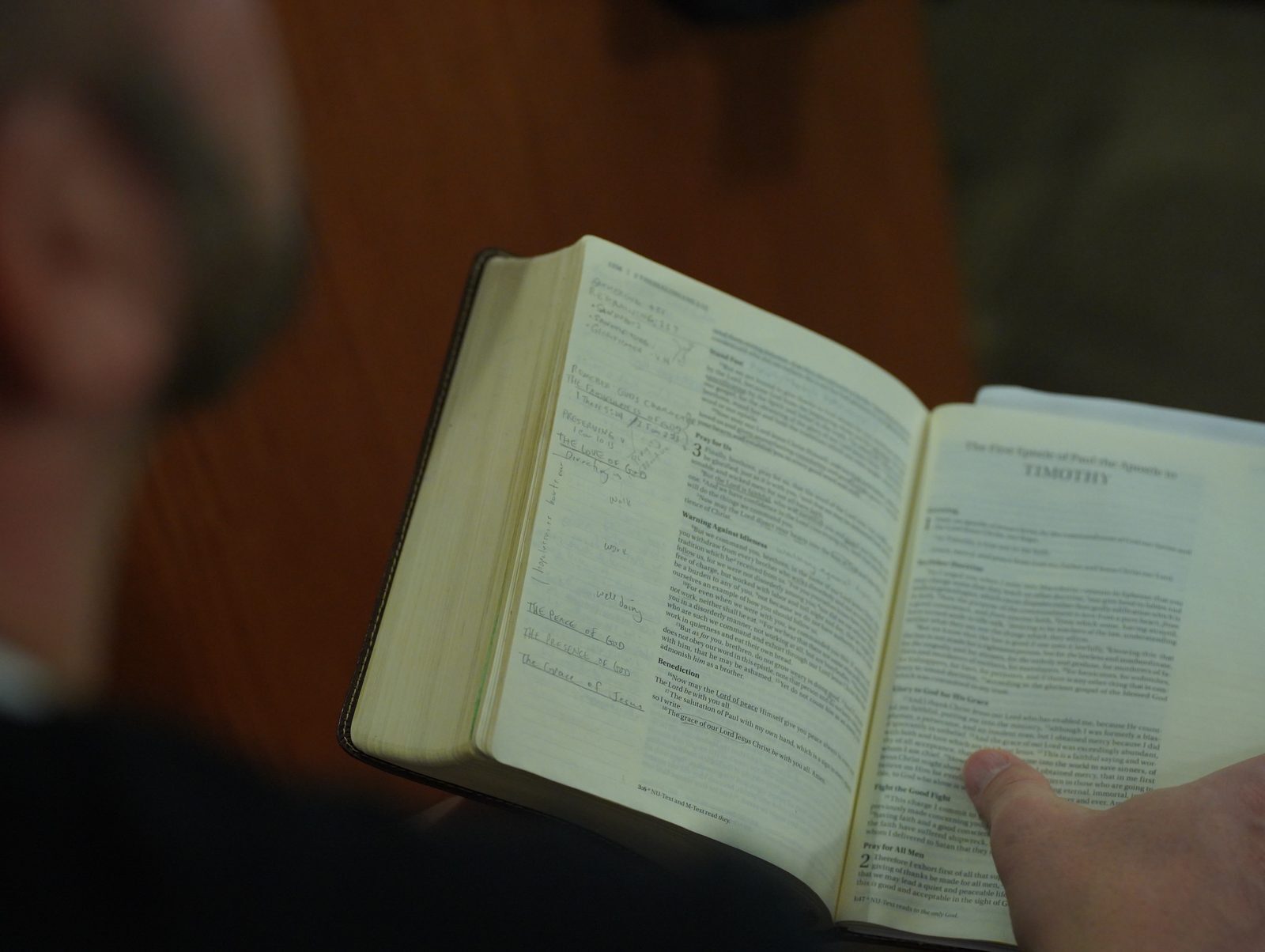
Jonah 4:1–4 (NKJV)
1 But it displeased Jonah exceedingly, and he became angry. 2 So he prayed to the Lord, and said, “Ah, Lord, was not this what I said when I was still in my country? Therefore I fled previously to Tarshish; for I know that You are a gracious and merciful God, slow to anger and abundant in lovingkindness, One who relents from doing harm. 3 Therefore now, O Lord, please take my life from me, for it is better for me to die than to live!” 4 Then the Lord said, “Is it right for you to be angry?”
Why was Jonah angry that God spared Nineveh?
Because God did exactly what Jonah always knew He would do. Jonah says so himself in verse 2: he ran to Tarshish in the first place because he knew God was gracious, merciful, slow to anger, and one who relents from doing harm. Nineveh's survival was not a surprise to him. It was the outcome he had been trying to prevent.
Read that verse again and notice what it is. It is a perfect statement of God's character — every word of it true, every word of it something a believer would put on a wall — and Jonah is using it as an accusation. He is quoting God's mercy back to God as the reason he is angry.
We do the same thing more often than we would like to admit. We take something true about God and turn it into a grievance. I knew You would let them off. I knew You would work it out for them. I knew this is how it would go. The theology is correct. The heart behind it has gone sideways.
And there is a contrast in the text worth sitting with. In Jonah 3:10, when God saw what Nineveh did, God relented. In Jonah 4:1, when Jonah saw what God did, he was displeased exceedingly and became angry. God is slow to anger. Jonah was angry immediately.
Can you pray and still not be changed?
Yes — and Jonah 4 is the proof. Verse 2 says plainly, “So he prayed to the Lord.” He did the right thing. He brought it to God instead of stewing in silence. But he came out of that prayer exactly the man he was when he went in. Prayer that does not bend us toward God's will has not finished its work.
Give Jonah credit before you criticize him: he prayed. He did not walk off and sulk. He took his anger directly to God, which is more than many of us do. There is a real difference between crying out to God and crying out against Him — a cry of why that is not a cry of accusation.
But look at the whole book as a prayer manual and you will see what is missing here. In chapter 1, sailors pray aimlessly to whatever gods they have, and Jonah points them to the one true God — and they believe. In chapter 2, Jonah spends three days in the belly of a fish before he opens his mouth, and when he does, he confesses, he consecrates, and he finds peace. In chapter 3, a whole city fasts and prays and turns from its ways. In every one of those chapters, prayer produced change.
In chapter 4, a man prays and stays exactly the same.
The purpose of prayer is not to inform God or to negotiate with Him. It is to bring us into alignment — with who He actually is, and then with what He actually wills. Jesus modeled it perfectly in the garden. He asked honestly for the cup to pass. He did not pretend the request was easy or noble. But then He finished the prayer the way we so often do not: “nevertheless, not as I will, but as You will” (Matthew 26:39, NKJV).
That last clause is the one that changes hearts. God hears everything we bring — the complaints, the finite reasoning, the plans we are sure are better. He is not offended by any of it. But the prayer that changes you is the one that ends in surrender.
What does self-pity actually look like?
In Jonah 4:1–3 it has five recognizable faces, and they arrive in order. Self-absorbed. Self-involved. Self-willed. Self-justifying. Self-serving. Every one of them is the same root — a person who has become the main subject of his own story — and each one will find somebody.
Self-absorbed. “It displeased Jonah exceedingly, and he became angry.” Pity starts with the feeling. A city is standing behind him in sackcloth, and he is narrating his own emotional state.
Self-involved. “Was not this what I said when I was still in my country?” Lost in his own thoughts. I knew it. I called this. He is more interested in having been right than in what actually happened. We know that cycle — I should have done this instead, I was right, they did hurt me, I knew they would.
Self-willed. “Therefore I fled previously to Tarshish.” He knew what God wanted. He chose otherwise. His will simply outranked God's. And notice: he fled and he was miserable, then he obeyed and he was still miserable — because the problem was never the assignment. It was the will of God itself.
Self-justifying. “For I know that You are a gracious and merciful God…” Now he explains himself using God's own character. When our actions contradict God's, we reach for a reason, and the reason usually starts with I knew He would.
Self-serving. “Please take my life from me, for it is better for me to die than to live.” Better for whom? Better for me.
Set that last one beside Paul. He faced the same arithmetic and came out the other side: “having a desire to depart and be with Christ, which is far better. Nevertheless to remain in the flesh is more needful for you” (Philippians 1:23–24, NKJV). Paul weighed it and landed on you. Jonah weighed it and landed on me.
Whenever we list the pros and cons of obeying God, we are almost always sorting them by what works out best for us. But there are things God asks that are not best for you at all. They are best for Him, and for someone else He has in mind — and if you have given Him your life, He will treat it as His. That is uncomfortable exactly when it starts being real.
Why did Jonah leave the city and sit on a hill?
Because self-pity always withdraws. Jonah 4:5 says he went out of the city, sat down on the east side, built himself a shelter, and waited to see what would become of the city. That is the whole pattern in one verse: he pulled back from people, turned his attention to his own comfort, and became a spectator of a work he had been sent into.
The withdrawal comes in layers, and they tend to arrive in this order.
He withdrew emotionally. Before he ever walked out, he had already asked to be released — take my life. I am done. I will not be part of this. That sentence has ended more ministries than moral failure has.
He withdrew physically. He left. He removed himself from the very people God had just rescued and built a small structure for one. It is worth noticing where he went: east of the city. Genesis 4:16 says Cain, after his anger at God's regard for his brother, “went out from the presence of the Lord and dwelt in the land of Nod on the east of Eden” (NKJV). The same direction, the same reason.
He became a spectator. He came to preach and stayed to watch — a good seat, a shaded spot, and no stake in the outcome. And there is a particular danger in that chair. A spectator believes he sees everything. He is the couch athlete who knows exactly what should have been done, from a camera hovering two hundred feet above the field. Once you have removed yourself from a situation, you stop seeing it — but you rarely stop believing you do.
Here is a practical marker, and it is the one to watch for in yourself before anyone else notices it: when someone begins to pull away, they usually stop giving and stop participating — and the giving stops well before the showing up does. Long before anyone misses them in the room, they have already stopped supporting the work.
And what was Jonah waiting for on that hill? He was hoping God would not relent. He wanted the city to fail, because for him to be right, everyone else had to be wrong — and hurt. That is a dangerous place to stand. Sometimes we want to be right at other people's expense.
What were the plant, the worm, and the wind for?
They were God's pity in action. Four times in this chapter the text says God prepared something — a plant, a worm, an east wind — the same word used in chapter 1 for the storm and the fish. None of it was punishment for its own sake. Every one of them was an intervention aimed at getting one angry man to turn around and look up.
Watch the movements in order.
He pursues. Three chapters of pursuit already — the storm, the fish, the second chance — and He is still not finished with this man. God has spent an entire book demonstrating that He is the God who comes after people who are running.
He reasons. “Is it right for you to be angry?” (v. 4). He does not scold and He does not overpower. He asks a question and waits, the way you would with someone you were not willing to lose.
He comforts. “And the Lord God prepared a plant and made it come up over Jonah, that it might be shade for his head to deliver him from his misery” (v. 6, NKJV). God did not want Jonah miserable. Sheer exhaustion dulls a person's sensitivity to God, and Jonah needed shade and rest before he needed anything else.
He persists. Then the worm (v. 7). God knew the relief was situational — that Jonah was fine only as long as the plant was there. Rest without repentance was never going to be enough, so God tried something else rather than giving up.
He corrects. Then the vehement east wind and the sun on his head (v. 8). When we are persistent in resisting God, God will come and correct us. “God resists the proud, but gives grace to the humble” (James 4:6, NKJV). It is far better for us to humble ourselves than for God to have to break that pride for us.
He demonstrates. “You have had pity on the plant for which you have not labored, nor made it grow” (v. 10). God does not leave Jonah to work it out alone. He shows him something true about his own heart: you still have the capacity to care. The hardness has not finished setting.
There is a hard mercy in the worm. God is not willing for us to take our comfort in anything other than Him, so He gives real relief from real discomfort — and then sometimes removes it, and the removal reveals what the thing had become. If losing it sends you straight back to misery, it had become an idol. If it sends you back to God — Lord, I never deserved that break, thank you for it — it was a gift held rightly.
Enjoy what God gives you. Just never praise the blessing instead of the One who gave it. Jonah got angry over a plant he did not plant, water, or grow.
Why does the book of Jonah end with a question?
Because the answer belongs to the reader. God's final words are, “And should I not pity Nineveh, that great city, in which are more than one hundred and twenty thousand persons who cannot discern between their right hand and their left—and much livestock?” (Jonah 4:11, NKJV). Jonah never answers. There is no verse twelve. The silence is deliberate.
Every other thread in this book gets resolved. The storm stops. The fish delivers. The city repents. But the last question just sits there, and the man it was asked of never says a word.
Which means it is not really Jonah's question anymore.
Notice what God does in those final two verses. He does not lecture. He draws a line between two kinds of pity and lets Jonah see them next to each other. You cared about a plant you did nothing for, that came up in a night and died in a night. I care about a city of a hundred and twenty thousand people who cannot tell their right hand from their left. Same capacity. Wildly different object.
So Jonah wept over a plant, and could not weep over a city.
Before we call that absurd, it is worth asking what we have wept over this week. We weep over our jobs. Over our health. Over the inconvenience, the unmet expectation, the plan that fell through. Those things are real. But set them beside the people God has actually put in front of us — and beside a borough of more than two and a half million neighbors — and the proportions get uncomfortable fast.
The New Testament has its own version of this man. In Luke 15, a younger son takes his inheritance, wastes it, ends up in a pig trough, and comes home — and his father throws a party. And the older brother, the one who stayed, the one who did everything right, will not go in. He stands outside the celebration and says, in effect, look at me. I have been here the whole time. Jesus opens that same chapter with the line the elder brother could not accept: “there is joy in the presence of the angels of God over one sinner who repents” (Luke 15:10, NKJV).
Two men, one Old Testament and one New, both standing outside a party God is throwing, both certain they have been wronged.
And underneath God's question is something He has been saying to Jonah since chapter one, in every storm and fish and plant and worm: you are worth it to Me. Three chapters of relentless pursuit were a demonstration. Then He turns and asks the obvious follow-up. I came after you like that. Are they not worth it too?
All of our stories are still unwritten. The relationship was never in God's hands — He has already shown what He will do. It is in ours.
Key Scriptures Explained
| Reference | What it says | Why it matters here |
|---|---|---|
| Jonah 4:2 | God is gracious, merciful, slow to anger, abundant in lovingkindness, One who relents from doing harm. | The theme of the whole book — and the reason Jonah ran. He is quoting God's mercy as a complaint. |
| Jonah 4:4, 9 | “Is it right for you to be angry?” | God reasons rather than overpowers. He asks the same question twice, patiently, and waits. |
| Jonah 4:6–8 | God prepared a plant, then a worm, then a vehement east wind. | Comfort, then the removal of comfort, then correction — all of it aimed at turning Jonah back. |
| Jonah 4:11 | “And should I not pity Nineveh, that great city…?” | The unanswered question the book ends on. It is now addressed to whoever is reading. |
| Matthew 26:39 | “Nevertheless, not as I will, but as You will.” | The clause Jonah's prayer was missing — honest request, then surrender. |
| Philippians 1:23–24 | Paul desires to depart, yet remaining is more needful for others. | The same choice Jonah faced, decided in the opposite direction. |
| James 4:6 | “God resists the proud, but gives grace to the humble.” | Why the east wind came. Resistance invites correction; humility invites grace. |
| Luke 15:10, 25–32 | Heaven rejoices over one sinner who repents — and the older brother refuses to go in. | Jonah's posture, told again by Jesus. Both men stand outside a celebration. |
| Genesis 4:16 | Cain went out from the presence of the Lord, east of Eden. | Anger at God's mercy toward someone else, and the same direction of travel. |
| 1 Chronicles 4:10 | Jabez asks to be kept from evil, “that I may not cause pain.” | The one right reason to pray for your own blessing — so you do no harm and become a blessing. |
Practical Application
- Finish your prayers the way Jesus finished His. Bring the honest complaint — God can hold it. Then add the clause: nevertheless, not my will but Yours. That sentence is what turns a prayer into a change.
- Name which face of self-pity is yours. Self-absorbed, self-involved, self-willed, self-justifying, self-serving. Most of us have one we return to. You cannot repent of something you have not identified.
- Watch the giving and the showing up. Withdrawal starts quietly, and it usually starts with giving before it ever shows up as an empty seat. If you have gone quiet, come back before it hardens.
- Thank God for the plant while you still have it. Enjoy what He gives, and praise the Giver rather than the gift. What we hold loosely, we do not have to lose to learn from.
- Set your worst week beside a real person. Name the thing that upset you most this week, then name one neighbor, coworker, or family member who does not know Jesus. Let the comparison do its work.
- Pray for the city by name. Not the abstraction — the block, the building, the person. Jonah could weep over a plant. The question is whether we can weep over Brooklyn.
If you are the one who said “better for me to die”
Twice in this chapter Jonah asks God to end his life, and both times it comes out of exhaustion and disappointment rather than sin. That is worth saying out loud, because it means the Bible does not treat those words as unspeakable. It records them, and it records God's response — which was not a rebuke. It was shade, and a question, and continued pursuit.
If you have had those thoughts, take them seriously, and do not carry them by yourself. Tell someone today — a friend, a family member, someone here. In the U.S. you can call or text 988 at any hour and reach the Suicide & Crisis Lifeline. God's posture toward Jonah on that hill is His posture toward you: He came closer.
A Prayer
Father, we thank You that You are the God who relents from doing harm — patient, long-suffering, gracious, and merciful. Teach us to accept everything from Your hand, the blessings and the challenges alike, and to show mercy to others the way we have received it.
Where we are angry, where we are disappointed, where our expectations have gone unmet — where we have grown so lost in ourselves that we cannot see a way out — come to us now. Reason with us the way You reasoned with Jonah. Remind us that the cross already answered the question of whether we are loved.
Turn our eyes off ourselves and back onto You. And give us Your heart for this city. In Jesus' name, amen.
Frequently Asked Questions
Was Jonah a real person or is this a parable?
A real person. Jesus treated Jonah as historical, referring to “the sign of the prophet Jonah” and saying that “the men of Nineveh will rise up in the judgment with this generation” (Matthew 12:39–41, NKJV). He grounded a claim about His own death and resurrection in the factual reality of Jonah's three days.
Did Jonah ever repent?
The book does not say. It ends with God's question and Jonah's silence, and that silence appears to be intentional. Since Jonah is traditionally understood to have written the account, the fact that he preserved his own worst chapter without softening it may itself be a kind of answer.
Is it wrong to be angry with God?
Jonah brought his anger straight to God in prayer, and God answered him with a question rather than a rebuke. There is a real difference between crying out to God and crying out against Him. The concern in this chapter is not that Jonah felt anger — it is that he prayed and remained unchanged by it.
What does “cannot discern between their right hand and their left” mean?
It describes people without moral or spiritual bearings — a city that genuinely did not know better. God names it as a reason for pity rather than a reason for judgment, which is precisely the point Jonah could not accept.
Why did God kill the plant?
The plant had done its work as comfort, but comfort alone was not going to change Jonah's heart. Removing it revealed what the plant had become to him — and gave God the illustration for His closing question: Jonah grieved something he never labored over, while a city of people went unmourned.
Listen to the Full Message
This teaching was preached on Sunday, August 30, 2026 — our final Sunday of the summer at Church in the Park. You can listen to the full message here, or browse the rest of the series and our other teaching in the Calvary Life media library.
This is the last message in our study through Jonah. If you are just joining the series, start at the beginning with Why a Prophet Ran From God: Mercy in Jonah 1.

Posted in Jonah Series
Posted in Jonah, Jonah 4, mercy, anger, self-pity, minor prophets, Verse by Verse, Brooklyn Church
Posted in Jonah, Jonah 4, mercy, anger, self-pity, minor prophets, Verse by Verse, Brooklyn Church
New here?
You're welcome at Calvary Life Brooklyn
We're a neighborhood church family in Marine Park, teaching straight through books of the Bible a passage at a time. No dress code, no test at the door - come exactly as you are.
Sundays at 10:00 AM · 1974 Coney Island Ave, Brooklyn, NY 11223 In person or online.
Recent
Would You Even Notice? Micah 3 and 4 Explained
September 27th, 2026
The Shepherd Doesn't Wait at the Fence: Micah 2 Explained
September 15th, 2026
Don't Make Him Get Up: Micah 1 Explained
September 7th, 2026
He Wept Over a Plant, Not a City: Jonah 4 Explained
September 7th, 2026
Eight Words That Changed a City: Jonah 3 Explained
September 3rd, 2026
Archive
2026
February
March
Do Good People Go to Heaven? What Romans 3 Really Says About Being Right With GodTired of Trying to Be “Good Enough”? Discover the Freedom of Faith: Romans 4How to Stand Firm When Life Falls Apart: Romans 5 for Everyday StrugglesDo I Really Have to Keep Sinning? Understanding Freedom in Christ from Romans 6Why Literal Interpretation Matters: Starting Matthew in a Skeptical Age - Matthew 1
April
May
September
2025
August
Jesus is Gentle and Lowly: How to Find True Rest for Your Soul (Matthew 11:28-30)Jesus Is Man: You are not Alone Jesus UnderstandsJesus Is God: Is Jesus a Good Teacher or Is He God? Honest Answers for SeekersJesus Is The Logos: Why That Changes EverythingJesus Is Savior: Why Religion Isn’t Enough and How Jesus Meets Every SeekerJesus Is Lion and Judge: Why We Can’t Ignore His AuthorityJESUS IS Servant King: How His Humility and Authority Shape Our Lives
September
JESUS IS: Feeling Lost, Empty, or Hopeless? Jesus Answers with ‘I AM’JESUS IS: Abide in the Vine, How to Live Fruitfully in ChristThe Power of God’s Word: Transform Lives in Brooklyn, NYSummer Events in Brooklyn: Community, Faith, and Transformation in Marine ParkWalking Justly: Lessons from Exodus 22–23How Exodus Teaches Us to Love Others: Exodus 20Discovering Your 'Before and After' with God: How Covenants Transform Lives: Exodus 23-24How Exodus Teaches Us to Love God: Exodus 20
October
Breaking Free: How to Living in God’s Power and Promise of Freedom. Exodus 20:1-2What Is True Worship? Insights from the Tabernacle: Exodus 25-27Journey to Wholeness: Moving from Salvation to Surrender: Exodus 19Embracing Your Priestly Identity in Everyday Life: Exodus 28-30Empowered by Grace: Understanding Our Purpose in Serving - Exodus 18Proximity Without Intimacy: Are You Really Walking With God? - Exodus 32
November
Walking Under God's Provision: Daily Bread and Genuine Faith": Exodus 16From Wandering to Worship: The Road Back to God - Exodus 33The Road Forward: BEING Transformed by GOD: Exodus 34Worship Beyond the Pew: Living a Life of Praise: Exodus 15How a Willing Heart Completes God’s Work in Brooklyn: Exodus 35-39Beyond the Lyrics: How Worship Transforms Our Hardened Hearts: Exodus 7-9
December
Are You Ready to Move from Salvation to Service?: Exodus 40When God Strikes at Our Idols: A Reflective Journey Through Pharaoh’s Story: Exodus 10Overcoming Hurdles While Serving: Serving God with Faith and Courage: Exodus 5-6Finding Purpose in the Wilderness: Exodus 2-3Overcoming Spiritual Hurdles to Serve: Exodus 4Raising Leaders in Faith: Timeless Teachings for a New Generation: 1 Timothy Overview
No Comments