
Here is a question worth sitting with before you read another word.
If God went quiet on you — if He stopped showing His face, stopped answering, stopped speaking into your week — would you notice?
Or would it just be another day in Brooklyn?
That is the question Micah 3 puts on the table, and it is more uncomfortable than the chapter's famous cruelty. We assume we would feel the absence immediately. Micah is not so sure. He is writing to people who still had the temple, still had the leadership structure, still had the vocabulary — and had not noticed that the voice had stopped.
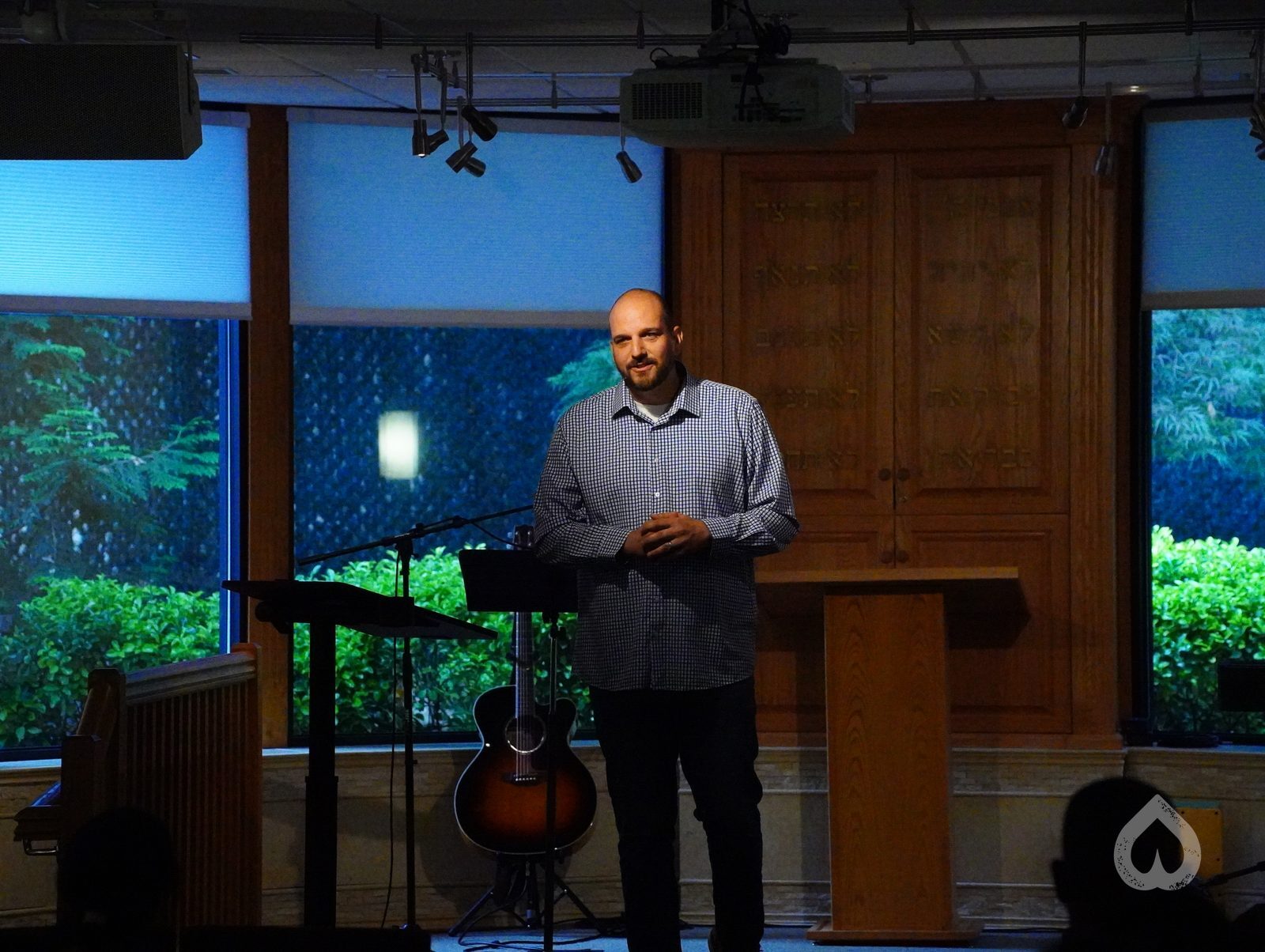
This is week three of our eight-week series through Micah at Calvary Life Brooklyn, and Sunday covered two chapters at once, on purpose. Chapter three ends with a mountain plowed flat. Chapter four opens with that same mountain lifted above every other mountain on earth. You cannot read one without the other and come away with the truth.
“And I said: ‘Hear now, O heads of Jacob, And you rulers of the house of Israel: Is it not for you to know justice?’”
— Micah 3:1 (NKJV)
What is Micah 3 about?
It is about leadership, and it is the third sermon in the book. Chapter one was a nation that disdained a holy God. Chapter two was a people preying on each other and seizing what God had given. Chapter three goes to the top — and takes all three branches at once. The rulers. The prophets. The priests.
And notice the order the book puts them in, because the order matters. God did not start with the leaders. He started with the people. By the time Micah turns to the men at the top, the question of who corrupted whom has already been answered.
Pastor Richie asked it plainly on Sunday: which came first, the people going sideways or the leadership going sideways? Chapter two already told us. The people told the prophets to be quiet — do not prattle — and then went looking for somebody who would say something easier. Leadership did not invent that appetite. It answered it.
That is not a comfortable thing for any of us to hold. It is much easier to be angry at whoever is in charge than to ask what the room was asking for.
Why does Micah describe leaders as cannibals?
Because he refuses to find a polite word for it. Verses two and three say these men strip the skin from God's people and the flesh from their bones, break their bones, and chop them in pieces like meat for the pot.
Some things should not be described gently. When leadership goes bad, it does not feel abstract to the people underneath it. It consumes them. Micah picks the most visceral image available because the polite version would let everyone off the hook.
And look at what verse two says is wrong with these men: they “hate good and love evil.” Not they do evil. They love it. The affections are inverted, not just the actions. This is deeper than corruption — it is a rewired appetite. The thing that should turn a person's stomach is the thing he now reaches for.
Then verse four, which is the hinge of the first section: “Then they will cry to the Lord, But He will not hear them; He will even hide His face from them at that time, Because they have been evil in their deeds.”
The men who would not hear the poor find out what an unanswered cry feels like. That is not God being petty. That is God letting a man experience the exact thing he manufactured.
What does it mean that God hides His face?
It means the withdrawal of something we mostly assume is automatic. Not the loss of salvation — the loss of audience. The sense of His nearness, the clarity of His direction, the experience of being heard.
And here is the part that should slow all of us down. Unconfessed sin does the same thing in an ordinary life. You can be genuinely wronged — actually, truly in the right about the thing that happened to you — and still find prayer strangely hindered, because you are holding something you have not brought into the light.
So the honest diagnostic is not “is God speaking?” It is “have I put myself anywhere He could speak to me?”
Richie put it in kitchen terms on Sunday, and it is the line from this message most worth carrying into the week: you have to meet Him at the coffee table for Him to sit at the coffee table with you. You have to give Him the time and the space.
We love retreats. We go away for a weekend and come back saying we have never felt His presence like that. But the retreat is not magic. It is just the one weekend a year we actually gave Him our attention. That could be a Tuesday. It could be a Monday morning — painful as Monday mornings are.
What was wrong with the prophets in Micah 3:5–7?
The message had a price tag. Verse five: they “chant ‘Peace’ While they chew with their teeth, But who prepare war against him Who puts nothing into their mouths.”
Read that slowly. If you fed them, you got peace. If you had nothing to give, you got war. The content of the sermon was set by the offering. That is not a preacher. That is a vendor.
The judgment that follows is the most frightening sentence in the chapter, and it is not fire. It is silence. “You shall have night without vision, And you shall have darkness without divination; The sun shall go down on the prophets, And the day shall be dark for them” (Micah 3:6, NKJV).
Amos names the same sentence and calls it what it is: “I will send a famine on the land, Not a famine of bread, Nor a thirst for water, But of hearing the words of the LORD” (Amos 8:11, NKJV). A famine of hearing God. That is a real and terrible thing.
Verse seven finishes it: the seers ashamed, the diviners covering their lips, “For there is no answer from God.” They kept the platform. They lost the voice.
And if you want the modern version of that, it is not hard to find. God has stopped talking to some people and they have not stopped talking. Some of them started out genuinely hearing and genuinely teaching — and then drifted, slowly, by reading the comments. Watching what landed. Adjusting. Tuning. Until they were giving people what they wanted instead of what they needed, and could not tell you when the switch happened.
There is nothing more exposed than a man still speaking after God has stopped.
What does “I am full of power by the Spirit of the Lord” mean?
It means the difference between those men and Micah was not talent. It was filling.
Against every voice for hire, one man stands up: “But truly I am full of power by the Spirit of the Lord, And of justice and might, To declare to Jacob his transgression And to Israel his sin” (Micah 3:8, NKJV).
Micah is not braver than they are. He is full where they are empty. That is the whole secret of his spine, and he names the source out loud so nobody mistakes it for personality.
Two things sit underneath that verse and both are worth saying plainly.
He can name their sin because he is not in it. It is very hard to declare another man's transgression while you are carrying your own. That is not spiritual pride. It is just a clean conscience and a straight back — and it is why this kind of preaching has to come with humility rather than instead of it. Moses and Paul both offered to stand in the sinner's place. That is the tone.
And the filling is not rationed. If you belong to Jesus, you do not have less of the Holy Spirit than anyone else in the room. Nobody gets a bigger portion. The question was never how much of Him you have. It is how much of you He has. That is the part that grows, and it is measurable: are you speaking more about Him than you were a year ago? Is more of your week actually shaped by His will? Does your life look more like Jesus than it did?
Answer those honestly and you will know whether the word full applies to you.
Why is religion the most dangerous thing in Micah 3?
Because it was being used as insurance. Verse eleven lays the whole system out — heads judging for a bribe, priests teaching for pay, prophets divining for money — and then adds the line that makes it unbearable: “Yet they lean on the Lord, and say, ‘Is not the Lord among us? No harm can come upon us.’”
Their doctrine of God's presence was correct. The Lord really had put His name in that place. They simply drew the opposite conclusion from the one the truth demanded. They took a promise meant to make them holy and used it as a guarantee they would never be touched.
It is possible to say all the right things about God being with you and use them as protection against ever having to change.
Here is a picture of the same failure from a different book. In 2 Kings 6, a man is cutting down a tree and the iron axe head flies off and sinks into the Jordan — and it was borrowed. He is left standing there swinging a stick. Elisha throws in a branch and the iron floats (2 Kings 6:5–6, NKJV).
Take the picture for what it is. You can be putting in real effort, at a real project, for God — with nothing on the end of the handle. Motion is not the same as power. A great deal of church work gets done in God's name and for God's sake without God anywhere in it.
So verse twelve lands: “Therefore because of you Zion shall be plowed like a field, Jerusalem shall become heaps of ruins, And the mountain of the temple Like the bare hills of the forest.” The temple mount, brush. That is where chapter three stops.
And that verse is the one that saved Micah's life a hundred years later. When Jeremiah was on trial for preaching the same thing, his defenders pulled Micah 3:12 out of the archive and reminded the court that Hezekiah had repented instead of killing the preacher (Jeremiah 26:18–19). Somebody had written it down. Somebody remembered.
Why does Micah 4 start where chapter 3 ends?
Because there is no chapter break in the original. Somebody added that later, and if you honor it you will miss the entire point.
Read it without the gap. “The mountain of the temple like the bare hills of the forest” (3:12) — “Now it shall come to pass in the latter days That the mountain of the Lord's house Shall be established on the top of the mountains, And shall be exalted above the hills; And peoples shall flow to it” (4:1).
Same mountain. One verse apart. Plowed under, then lifted above every other mountain on earth.
Between those two lines is the entire distance between what we have done and what God will do.
Richie said it on Sunday about as directly as it can be said: He loves you enough to destroy your world to save your soul. The demolition in chapter three is not the story. It is what clears the ground.
And notice what draws the nations in chapter four. Not conquest. Not spectacle. Teaching. “Come, and let us go up to the mountain of the Lord… He will teach us His ways, And we shall walk in His paths” (Micah 4:2, NKJV). People flow toward a God who explains Himself — and they come with the intention of obeying, not just of knowing.
Which is exactly the thing chapter two says they threw away.
What does the kingdom in Micah 4 actually look like?
Four things, and each one is a reversal of something in chapter three.
A Judge who cannot be bribed. “He shall judge between many peoples, And rebuke strong nations afar off” (4:3). Chapter three had heads judging for a bribe. Chapter four has a Judge who settles disputes from a mountain, at a distance, without a payment changing hands.
Weapons repurposed, not destroyed. “They shall beat their swords into plowshares, And their spears into pruning hooks; Nation shall not lift up sword against nation, Neither shall they learn war anymore” (4:3). Notice the verb. The metal is not thrown away — it is reshaped into something that feeds people. God does that with people too.
Safety that is ordinary. “But everyone shall sit under his vine and under his fig tree, And no one shall make them afraid” (4:4). Not a parade. A man sitting in his own yard, unafraid. That is the picture of the kingdom, and it is deliberately unspectacular.
A people of many nations, one desire. “Many nations shall come” (4:2), and “we will walk in the name of the Lord our God Forever and ever” (4:5). Look around a room like ours on a Sunday — different countries, different languages at home, different histories. Diverse in every way except one. Not diverse in desire. The only thing uniting any of us is the family of God, and it is the only family that finally holds.
Who gets gathered into the kingdom?
Read the roster. “I will assemble the lame, I will gather the outcast And those whom I have afflicted; I will make the lame a remnant, And the outcast a strong nation” (Micah 4:6–7, NKJV).
The lame. The outcast. And — do not skip this one — those God Himself afflicted.
He does not assemble a kingdom out of the strong. The material He chooses is the material everybody else discarded, and He is still doing it. If you have ever looked around a church and quietly wondered whether you were the weakest thing in the room, Micah 4:6 was written with you specifically in view. That is not the disqualification. That is the recruitment notice.
And the gathering is not temporary relief. “So the Lord will reign over them in Mount Zion From now on, even forever” (4:7). It ends in a reign with no expiration date on it.
What does “to Babylon you shall go — there you shall be delivered” mean?
It is the pastoral center of the whole chapter, and it is the verse to write down.
Verse nine drops out of the far future and back into the present tense without warning: “Now why do you cry aloud? Is there no king in your midst?” The picture becomes a woman in labor. Then verse ten: “For now you shall go forth from the city, You shall dwell in the field, And to Babylon you shall go. There you shall be delivered; There the Lord will redeem you From the hand of your enemies.”
Read the word there twice, because everything is in it.
Not before Babylon. Not instead of Babylon. There. In the place of exile, at the bottom of the descent, God says that is where the rescue happens. He does not offer them a detour around the worst thing. He tells them what it is for and promises to meet them inside it.
And the image He chooses is labor. A woman in birth pains is in genuine agony and is also, at that exact moment, producing life. The pain is not pointless and it is not punishment — it is productive. There is a baby on the other side of it.
Most of us are praying to skip the middle of the story. Micah says God already planned to meet His people at the bottom of it.
Say that to somebody this week who is convinced that what they are going through is meaningless.
Key Scriptures Explained
| Reference | What it says | Why it matters here |
|---|---|---|
| Micah 3:1 (NKJV) | “Is it not for you to know justice?” | The one thing required of leadership — asked as a question that should have been an insult to have to ask. |
| Micah 3:2 (NKJV) | “You who hate good and love evil.” | The affections are inverted, not just the actions. A rewired appetite, not ordinary corruption. |
| Micah 3:4 (NKJV) | “Then they will cry to the Lord, But He will not hear them.” | The men who would not hear the poor discover what an unanswered cry feels like. |
| Micah 3:5 (NKJV) | They chant “Peace” while they chew, and prepare war against whoever feeds them nothing. | The sermon was priced by the audience. That is a vendor, not a preacher. |
| Micah 3:6 (NKJV) | “Night without vision… the day shall be dark for them.” | The judgment on false teaching is silence, not fire. |
| Amos 8:11 (NKJV) | “A famine… of hearing the words of the LORD.” | Names the same sentence and tells you how serious it is. |
| Micah 3:8 (NKJV) | “But truly I am full of power by the Spirit of the Lord.” | The one clean witness. Not braver — filled. He names the source so nobody credits the personality. |
| Micah 3:11 (NKJV) | “Is not the Lord among us? No harm can come upon us.” | Correct doctrine used as insurance against ever having to change. |
| 2 Kings 6:5–6 (NKJV) | The borrowed iron axe head flies off and sinks; Elisha makes it float. | You can swing hard, at a real project, with nothing on the end of the handle. |
| Micah 3:12 (NKJV) | “Zion shall be plowed like a field.” | Where chapter three stops — and the verse that saved Micah's life a century later (Jer. 26:18–19). |
| Micah 4:1 (NKJV) | “The mountain of the Lord's house shall be established on the top of the mountains.” | Same mountain as 3:12, one verse later. The hinge of both chapters. |
| Micah 4:3 (NKJV) | “They shall beat their swords into plowshares.” | Repurposed, not destroyed. God does that with people too. |
| Micah 4:6–7 (NKJV) | “I will assemble the lame, I will gather the outcast.” | He does not build a kingdom out of the strong. |
| Micah 4:10 (NKJV) | “To Babylon you shall go. There you shall be delivered.” | Not spared the exile — delivered in it. The pastoral centre of the chapter. |
Practical Application
- Run the silence test. If God stopped speaking this week, would anything in your routine change? If the honest answer is no, that is the diagnosis — and it is fixable.
- Book the coffee table. Pick a time and a place and be there tomorrow. You cannot be met somewhere you never sit down.
- Check what you are leading. Micah 3 is aimed at leaders, and every one of us leads something — a household, a crew, a classroom, a small group. The test is not competence. It is appetite: what do you love, and who is paying for what you are building?
- Check the axe head. Name one thing you are working hard at for God that you have not actually asked Him about. Stop swinging and go get the tool back.
- Refuse the insurance policy. Where have you used a true thing about God's presence as a reason not to change? Bring that one into the light.
- Say verse ten to somebody. Find the person in your life convinced their pain is pointless and tell them where God promised to meet His people — in it, not after it.
A Prayer for This Week
Father, we do not want to be people who would not notice if You went quiet. Tear down whatever we have built that keeps us from hearing You, and replace it with the truth of who You actually are.
Where we have led anything badly — a home, a team, a room of people — show us the appetite underneath it, and forgive us. Where we have been swinging hard at something You were never in, stop us and give the tool back. Where we have said true things about You and used them to avoid changing, expose it gently and let us repent before it costs anyone else.
And for everyone reading this from the bottom of something: thank You that You did not promise a way around it. Thank You that You said there. Meet us in it. Make the labor productive. Remind us that this is the worst it will ever be, and that it is not the truest thing about us.
In Jesus' name, amen.
Frequently Asked Questions
Is Micah 3 about political leaders or church leaders?
Both, and neither exclusively. Micah names three groups — the civil rulers, the prophets, and the priests — so the chapter covers governance, teaching, and religious office together. But the application in the text is not about titles. It is about anyone who has responsibility for other people, which in practice is almost everyone.
Does God really stop hearing prayer?
Micah 3:4 says these men cried out and were not heard, and the reason given is their deeds. Scripture elsewhere names other things that hinder prayer — unconfessed sin, unforgiveness, selfish motives, how a person treats their household. The point is not that God becomes unwilling. It is that we are in a relationship with Him, and relationships are affected by how we live. Confession is the prayer that always gets through.
Why is there a chapter break between Micah 3 and 4?
Chapter and verse divisions were added to the text long after it was written and are not part of the original. Micah 3:12 and 4:1 are one continuous thought about one mountain. Reading them apart gives you either despair or optimism; reading them together gives you the gospel.
What does “beat their swords into plowshares” mean?
The weapons are reforged into farm tools — the same metal, put to feeding people instead of killing them. Micah 4:3 is describing a peace so complete that nations stop training for war at all. Isaiah preached nearly the same words in the same generation (Isaiah 2:2–4): two witnesses, one kingdom.
If God promised to deliver them, why send them to Babylon at all?
Micah 4:10 does not explain it away, and neither should we. What it does is refuse to let the exile be meaningless: God names the destination, names the rescue, and puts the rescue in the destination. The image He picks is childbirth — real agony that is, at the same moment, producing life.
Listen to the Full Message
The full teaching on Micah 3 and 4 is available here: Micah 3–4: He Hides His Face · He Reigns. The rest of the library, including the Micah series as it unfolds, is at calvary.nyc/media.
Last week's chapter is a good companion read: The Shepherd Doesn't Wait at the Fence: Micah 2 Explained. Chapter two is the Shepherd going out to get the scattered. Chapters three and four are what He does with the ground once He has them back.

Posted in Micah Series
Posted in Micah 3, Micah 4, Micah 3 explained, Brooklyn Church, Bible study, Verse by Verse, Calvary Life Brooklyn
Posted in Micah 3, Micah 4, Micah 3 explained, Brooklyn Church, Bible study, Verse by Verse, Calvary Life Brooklyn
New here?
You're welcome at Calvary Life Brooklyn
We're a neighborhood church family in Marine Park, teaching straight through books of the Bible a passage at a time. No dress code, no test at the door - come exactly as you are.
Sundays at 10:00 AM · 1974 Coney Island Ave, Brooklyn, NY 11223 In person or online.
Recent
Would You Even Notice? Micah 3 and 4 Explained
September 27th, 2026
The Shepherd Doesn't Wait at the Fence: Micah 2 Explained
September 15th, 2026
Don't Make Him Get Up: Micah 1 Explained
September 7th, 2026
He Wept Over a Plant, Not a City: Jonah 4 Explained
September 7th, 2026
Eight Words That Changed a City: Jonah 3 Explained
September 3rd, 2026
Archive
2026
February
March
Do Good People Go to Heaven? What Romans 3 Really Says About Being Right With GodTired of Trying to Be “Good Enough”? Discover the Freedom of Faith: Romans 4How to Stand Firm When Life Falls Apart: Romans 5 for Everyday StrugglesDo I Really Have to Keep Sinning? Understanding Freedom in Christ from Romans 6Why Literal Interpretation Matters: Starting Matthew in a Skeptical Age - Matthew 1
April
May
September
2025
August
Jesus is Gentle and Lowly: How to Find True Rest for Your Soul (Matthew 11:28-30)Jesus Is Man: You are not Alone Jesus UnderstandsJesus Is God: Is Jesus a Good Teacher or Is He God? Honest Answers for SeekersJesus Is The Logos: Why That Changes EverythingJesus Is Savior: Why Religion Isn’t Enough and How Jesus Meets Every SeekerJesus Is Lion and Judge: Why We Can’t Ignore His AuthorityJESUS IS Servant King: How His Humility and Authority Shape Our Lives
September
JESUS IS: Feeling Lost, Empty, or Hopeless? Jesus Answers with ‘I AM’JESUS IS: Abide in the Vine, How to Live Fruitfully in ChristThe Power of God’s Word: Transform Lives in Brooklyn, NYSummer Events in Brooklyn: Community, Faith, and Transformation in Marine ParkWalking Justly: Lessons from Exodus 22–23How Exodus Teaches Us to Love Others: Exodus 20Discovering Your 'Before and After' with God: How Covenants Transform Lives: Exodus 23-24How Exodus Teaches Us to Love God: Exodus 20
October
Breaking Free: How to Living in God’s Power and Promise of Freedom. Exodus 20:1-2What Is True Worship? Insights from the Tabernacle: Exodus 25-27Journey to Wholeness: Moving from Salvation to Surrender: Exodus 19Embracing Your Priestly Identity in Everyday Life: Exodus 28-30Empowered by Grace: Understanding Our Purpose in Serving - Exodus 18Proximity Without Intimacy: Are You Really Walking With God? - Exodus 32
November
Walking Under God's Provision: Daily Bread and Genuine Faith": Exodus 16From Wandering to Worship: The Road Back to God - Exodus 33The Road Forward: BEING Transformed by GOD: Exodus 34Worship Beyond the Pew: Living a Life of Praise: Exodus 15How a Willing Heart Completes God’s Work in Brooklyn: Exodus 35-39Beyond the Lyrics: How Worship Transforms Our Hardened Hearts: Exodus 7-9
December
Are You Ready to Move from Salvation to Service?: Exodus 40When God Strikes at Our Idols: A Reflective Journey Through Pharaoh’s Story: Exodus 10Overcoming Hurdles While Serving: Serving God with Faith and Courage: Exodus 5-6Finding Purpose in the Wilderness: Exodus 2-3Overcoming Spiritual Hurdles to Serve: Exodus 4Raising Leaders in Faith: Timeless Teachings for a New Generation: 1 Timothy Overview
No Comments