
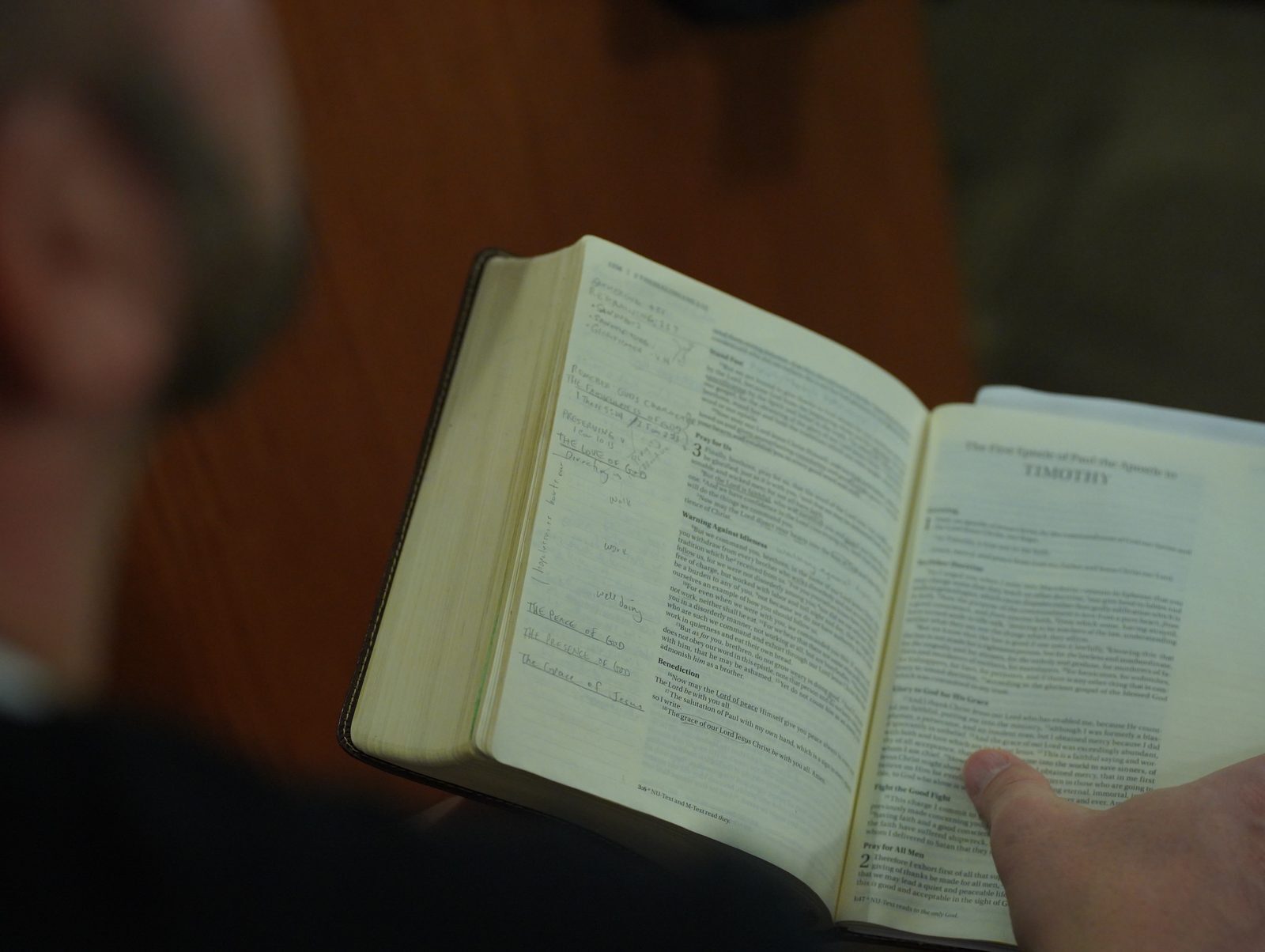
A man lies in bed at night. He is not sleeping. He is working out how to get a field that belongs to somebody else — and by morning he does it, because he has the power in his hand to do it.
That is how Micah 2 opens. Not with a war, not with an invasion. With a man and a plan and a neighbor who is about to lose everything.
And the chapter ends with a Shepherd breaking a gate open and walking out in front of His people.
Between those two pictures is the whole thing. Micah 1 was the Lord coming down — stepping out of mercy to judge. Micah 2 is the Lord coming to — to a flock whose field has been taken, whose own shepherds have gone bad, and who have started telling the preachers to be quiet. He comes to gather them anyway.
This is week two of our eight-week series through Micah at Calvary Life Brooklyn, and it is a chapter about appetite as much as anything else. What you will sit still for. What you will eat. Who you will listen to when the truth gets uncomfortable.
“Woe to those who devise iniquity, And work out evil on their beds! At morning light they practice it, Because it is in the power of their hand. They covet fields and take them by violence, Also houses, and seize them. So they oppress a man and his house, A man and his inheritance.”
— Micah 2:1–2 (NKJV)
What is Micah 2 actually about?
It is about a Shepherd and three things He guards: His people's provision, their possession, and their position. Chapter one showed God as Judge. Chapter two shows Him as Shepherd — and a shepherd's job is to keep wolves off the flock, keep the flock fed, and gather them back in at night when they have scattered.
Read the chapter that way and the structure opens up. There are wolves outside the fold (verses 1–2). There is a judgment that turns the wolves' own weapon back on them (3–5). There are sheep who reject the shepherd's voice and start acting like wolves themselves (6–11). And then, in two verses, the tone changes completely and the Shepherd starts speaking (12–13).
Pastor Richie put the picture plainly on Sunday: a shepherd leads the sheep out into a field where they can eat, keeps the threats off them while they do, and then gathers them back together at night to keep them safe. In the morning he lets them scatter again. That rhythm — out, guarded, gathered — is what God is doing with His people in this chapter.
And one more thing worth noticing before we get into it. Wolves show up where the sheep are healthy. Put food on a plate and you find out what else is in the neighborhood. A church that is actually growing will attract attention that a dying one never does.
Why does God treat stealing a field as more than a property crime?
Because in Israel a field was never just an asset. Land was assigned by God, family by family, as the visible sign that a household had a share in the covenant. Take a man's parcel and you have not merely cost him income — you have cut him off from the tangible proof that he belongs to God's people.
God built the whole system so this could not happen permanently. “The land shall not be sold permanently, for the land is Mine; for you are strangers and sojourners with Me” (Leviticus 25:23, NKJV). Nobody in Israel actually owned the ground. They held it as tenants of God, and He wrote the law so that no family could be permanently dispossessed.
Which is exactly what makes Micah 2:2 so ugly. These men found a legal way around the law of God. They did not break in at night with weapons. They worked the system until the system handed them the field, and then they went to bed.
That word in verse two — inheritance — is the hinge of the chapter. It is not a word about real estate. It is a word about what God gave you and what somebody else is trying to pry loose.
What inheritance can’t be taken from you?
The one you cannot walk the boundary of. Israel's inheritance was visible — you could pace it out, put stones at the corners, point at it. Ours is not, which is precisely why it has to be taught, named, and remembered. A field can be seized. A building can come down in an hour. What God gave you in Christ is held somewhere no thief reaches.
Sunday split it into two words that are worth carrying around.
What you possess. Salvation. Eternal life. The Holy Spirit living in you. Paul calls Him the down payment: you were “sealed with the Holy Spirit of promise, who is the guarantee of our inheritance” (Ephesians 1:13–14, NKJV). Not a wage you earned. A deposit He left.
What you are. A child of God — adopted, and the Bible does not treat adopted children as second-tier. The paperwork is signed. You are as much a son or daughter in that house as anyone. You are also a new creation: “if anyone is in Christ, he is a new creation; old things have passed away; behold, all things have become new” (2 Corinthians 5:17, NKJV).
Here is why this matters for a chapter about thieves. Every attack in Micah 2 aims at one of those two things — what is yours, or who you are. The enemy either tries to pry the possession out of your hands or tries to talk you out of your position. Look what you did. There's no way you're still a Christian.
And the honest answer is: you are right, I should not be, based on what I did. That is the whole point of it being a gift. Nobody can take it from you, and nobody can take you from Him.
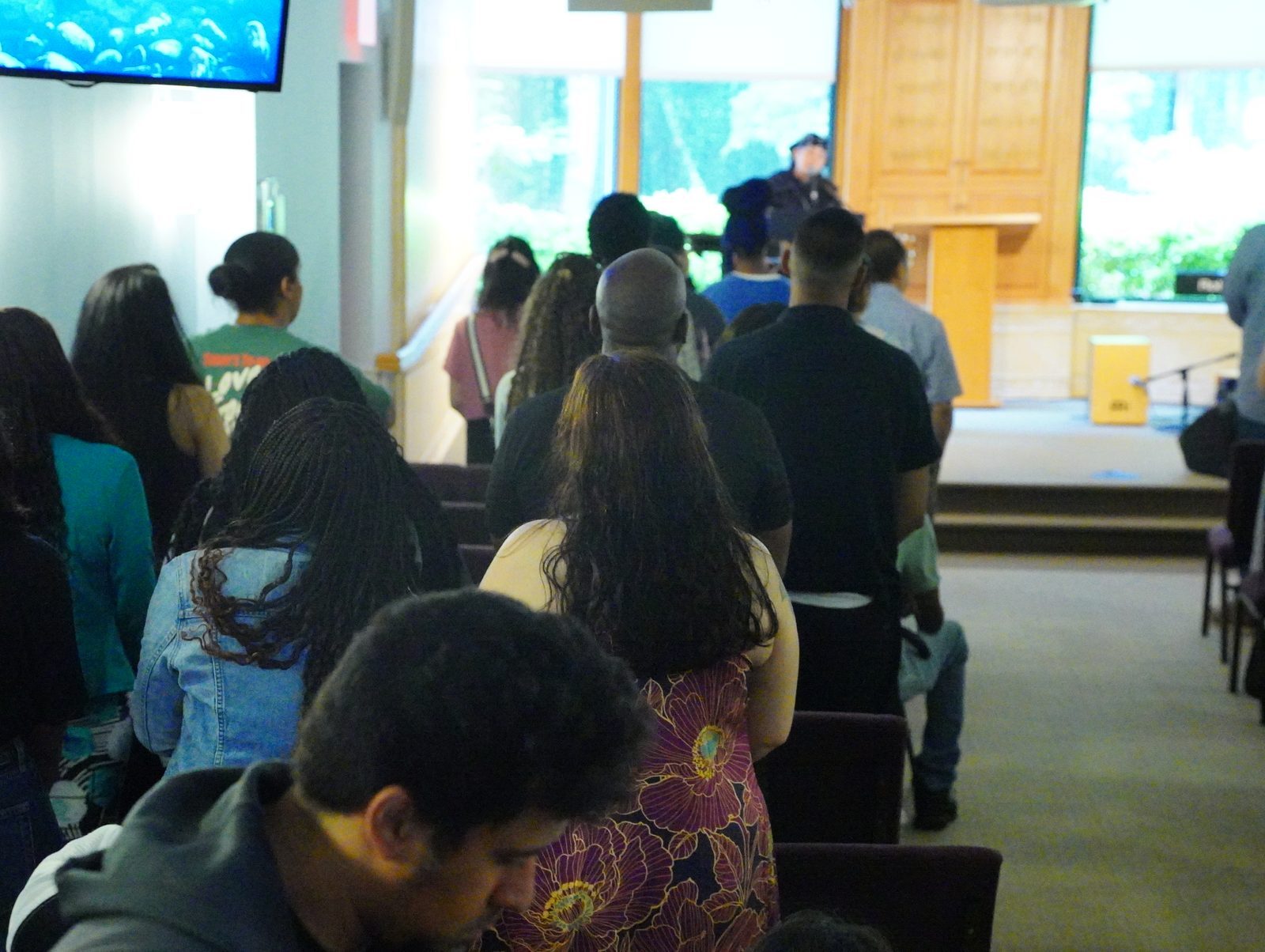
Why do the boundaries disappear in Micah 2:5?
Because the men who removed other people's boundaries destroyed the machinery that protected their own. God's sentence is precise: “Therefore you will have no one to determine boundaries by lot In the assembly of the Lord” (Micah 2:5, NKJV). They spent their nights figuring out how to move a line. Now there is nobody left to draw one for them.
Notice what God says just before that. They devised; He says He is devising too — “against this family I am devising disaster, From which you cannot remove your necks” (Micah 2:3, NKJV). He aims at the exact thing they misused. And then the taunt they wrote gets read back over them: “We are utterly destroyed! He has changed the heritage of my people” (Micah 2:4, NKJV). The men who composed the proverb become the subject of one.
This is not a hard principle to translate. A protection you tear down because it is inconvenient to you today is a protection that will not be there when you need it. Take away a boundary that guards somebody else's portion and you have taken it away from yours in the same motion. The freedom you argue out of existence for someone you disagree with is the freedom that is gone when the argument turns around.
They wanted the boundary moved. God let them have a world with no boundaries in it. That was the judgment.
Did the teachers stop teaching, or did the sheep stop eating?
Micah 2 puts the blame in an uncomfortable place. It is the people, not the government, who move to shut the preaching down: “‘Do not prattle,’ you say to those who prophesy” (Micah 2:6, NKJV). Stop going on about this. Do not say that over us. And when the true voice goes quiet, an appetite is already waiting for a substitute.
This is the part of the chapter that breaks a pastor's heart, and it was the part Richie sat on longest. A shepherd expects to fend off wolves. In verse six he is fending off the flock.
They cannot answer the charge, so they legislate against it. That instinct is old and it is still here: when conviction cannot be argued with, somebody tries to make it unsayable.
Then verse eight tells you what happens next. “Lately My people have risen up as an enemy — You pull off the robe with the garment From those who trust you” (Micah 2:8, NKJV). Sheep with no shepherd's voice over them do not stay sheep. They start robbing people who trusted them. The danger has stopped coming from outside the fold. Verse nine goes further and names the women and the children as the ones being put out.
And then the counterfeit walks in. “If a man should walk in a false spirit And speak a lie, saying, ‘I will prophesy to you of wine and drink,’ Even he would be the prattler of this people” (Micah 2:11, NKJV). That man they will listen to. Not because he is convincing — because he is pleasant.
So which came first? Did the teachers stop teaching the whole Word, or did the people stop eating it? Both answers indict somebody in the room. A congregation is not a passenger. What a room will sit still for is what a room will eventually be fed. You decide who survives in this world with your attention and with your wallet, and that is truer of preaching than of almost anything else.
There is a second lie tucked into verse seven that deserves an answer: “Is the Spirit of the Lord restricted?” (Micah 2:7, NKJV). The accusation underneath it is that following God shrinks your life. Scripture says the opposite — “where the Spirit of the Lord is, there is liberty” (2 Corinthians 3:17, NKJV). There is guidance, yes. But guidance is not bondage. It is the difference between a fence and a leash.
And when the guidance goes, what replaces it is not freedom. Proverbs says it exactly: “Where there is no revelation, the people cast off restraint” (Proverbs 29:18, NKJV). Not the people get liberated. The people throw off the thing that was holding them together.
What does it mean that the Shepherd “breaks open” and goes first?
It means the chapter that started with thieves ends with God at the front of His own people again. After eleven verses of indictment, verse twelve turns without warning: “I will surely assemble all of you, O Jacob, I will surely gather the remnant of Israel” (Micah 2:12, NKJV). He says it twice, and He is the subject of both verbs. He does the assembling. He does the gathering.
That is what a shepherd does. The sheep wander; he goes and gets them. Not from the fence, not by waiting to see whether they find their own way home — he goes out to wherever the scattering left them.
Richie described what that pursuit actually feels like, and it is not always gentle. When a child runs toward the street, the hand that catches the arm is strong. The child fights it for about two seconds, realizes the grip is not loosening, and stops. It is uncomfortable, and it is the most loving thing happening on that street. Sometimes God simply tightens His grip until we stop pulling.
Then verse thirteen: “The one who breaks open will come up before them; They will break out, Pass through the gate, And go out by it; Their king will pass before them, With the Lord at their head” (Micah 2:13, NKJV). The Breaker goes first.
And there is something quietly beautiful in that picture. A shepherd usually works from behind — circling, prodding, keeping strays in line. A shepherd walking out in front means the flock is following. It means He does not have to chase them anymore. That is what Israel had with the pillar of cloud and the pillar of fire: it moved, and they moved.
Which raises the question the whole message ended on. Psalm 32 lays out both options in two verses: “I will instruct you and teach you in the way you should go; I will guide you with My eye. Do not be like the horse or like the mule, which have no understanding, which must be harnessed with bit and bridle” (Psalm 32:8–9, NKJV).
Some people get led by a look. Some have to get pulled. Both end up in the same place — God is that determined — but only one of them is a relationship.
Key Scriptures Explained
| Reference | What it says | Why it matters here |
|---|---|---|
| Micah 2:1–2 (NKJV) | Men devise evil on their beds and by morning seize fields, houses, and a man's inheritance. | Sin with a blueprint. Morning light is only the delivery date; the work was done in the dark. |
| Leviticus 25:23 (NKJV) | “The land shall not be sold permanently, for the land is Mine.” | Why this is not a property crime. God built the law so no family could be permanently dispossessed. |
| Micah 2:3 (NKJV) | “Against this family I am devising disaster, From which you cannot remove your necks.” | They devised; God devises too. He aims at the exact thing they misused. |
| Micah 2:5 (NKJV) | “You will have no one to determine boundaries by lot In the assembly of the Lord.” | The protection they tore down for someone else is gone when they need it. |
| Micah 2:6 (NKJV) | “‘Do not prattle,’ you say to those who prophesy.” | It is the flock, not the state, that moves to silence the preaching. |
| Micah 2:7 (NKJV) | “Is the Spirit of the Lord restricted?” | The oldest lie about God — that following Him shrinks your life. |
| 2 Corinthians 3:17 (NKJV) | “Where the Spirit of the Lord is, there is liberty.” | The answer to verse seven. Guidance is not a leash. |
| Micah 2:11 (NKJV) | “I will prophesy to you of wine and drink.” | The counterfeit gets a hearing because he is pleasant, not because he is right. |
| Proverbs 29:18 (NKJV) | “Where there is no revelation, the people cast off restraint.” | What actually replaces the Word when the Word goes quiet. |
| Micah 2:12 (NKJV) | “I will surely assemble… I will surely gather the remnant of Israel.” | Said twice, and He is the subject both times. He does the gathering. |
| Micah 2:13 (NKJV) | “Their king will pass before them, With the Lord at their head.” | The Shepherd in front means the flock is following, not being chased. |
| Psalm 32:8–9 (NKJV) | Guided with His eye, or harnessed with bit and bridle. | The question the message ends on. Both get you there. Only one is closeness. |
Practical Application
- Name your inheritance out loud. Israel could walk their boundary; you cannot. Write down what you actually possess in Christ and who you actually are. What is not named is easy to talk you out of.
- Check what you defend. Before you tear down a protection that is inconvenient to you, ask who else it was guarding — and whether you will want it standing next year.
- Audit your appetite. List what you have listened to, watched, or read this week. How much of it was the Word, and how much was a voice promising wine? A famine of the Word always begins with an appetite.
- Do not silence the hard message. When teaching convicts you, notice the impulse to make it stop. That impulse is the one Micah 2:6 is about.
- Answer the bridle question honestly. Does God have to pull you into obedience, or is there enough closeness that a look would do it? Name one area where you have been the mule.
- Get gathered. He assembles His people into a flock, not a scattering of individuals. If the last few months left you drifting, come back to a room where the Word gets taught.
A Prayer for This Week
Father, thank You that You keep coming to us. We wander like sheep — we push away the good food You are holding out and go eat somewhere else, and still You come. You are patient. You are long-suffering. You have not given up on anyone in this room.
Where we have listened to what was pleasant instead of what was true, forgive us. Where we have wanted the preaching to stop because it was getting close, soften us. Where we have torn something down because it was in our way, show us what we actually did.
Thank You that what You have given us cannot be seized, and that who we are in You cannot be argued away. Make us sheep You can lead from the front — guided by Your eye, not dragged by a bridle. Be our Head again, in every part of our lives. In Jesus' name, amen.
Frequently Asked Questions
Is Micah 2 about politics or about the church?
The text is addressed to God's own covenant people, and its sharpest words are aimed inside the community, not outside it. The men seizing fields are Israelites; the people telling the prophets to be quiet are Israelites. Whatever else it touches, Micah 2 is first a word to the household of faith about itself.
What does “inheritance” mean in Micah 2?
For Israel it meant the family's assigned portion of land — the visible sign of their share in God's covenant. Taking it cut a household off from the proof that they belonged. The New Testament carries the word forward to what believers hold in Christ, sealed by the Spirit as a guarantee (Ephesians 1:13–14, NKJV).
Can a Christian actually lose their salvation, the way verse 8 seems to threaten?
Micah 2 is not addressing that question. It describes a covenant people facing real consequences for real rebellion — discipline within the family, not adoption reversed. Sunday's message was clear that the possession is held by God and the position is secured by the blood of Jesus, and that this is exactly why the enemy attacks confidence in it rather than the thing itself.
Who are the “wolves” in this chapter?
Micah does not use the word, but the picture fits: predators who plan in the dark and act at dawn. The unsettling turn comes in verse eight, where God's own people “risen up as an enemy” start stripping the robes off those who trusted them. By then the danger is not outside the fold.
What is the “one who breaks open” in Micah 2:13?
The Hebrew pictures someone forcing a gate so the flock can pour through, and the verse identifies Him plainly: their king passes before them, with the Lord at their head. Christians have long read this as pointing toward Christ — the Shepherd who does not drive the flock from behind but opens the way and walks it first.
Listen to the Full Message
The full teaching on Micah 2 — “He Comes To: The Shepherd” — is available here: Micah 2: He Comes To. The rest of the library, including the Micah series as it unfolds, is at calvary.nyc/media.
If you missed the first week, start there: Don’t Make Him Get Up: Micah 1 Explained. Chapter one is God coming down. Chapter two is God coming to.

Posted in Micah Series
Posted in Micah 2, Micah 2 explained, Brooklyn Church, Bible study, Good Shepherd, Verse by Verse, Calvary Life Brooklyn
Posted in Micah 2, Micah 2 explained, Brooklyn Church, Bible study, Good Shepherd, Verse by Verse, Calvary Life Brooklyn
New here?
You're welcome at Calvary Life Brooklyn
We're a neighborhood church family in Marine Park, teaching straight through books of the Bible a passage at a time. No dress code, no test at the door - come exactly as you are.
Sundays at 10:00 AM · 1974 Coney Island Ave, Brooklyn, NY 11223 In person or online.
Recent
What Does God Really Want From You? Micah 5 and 6 Explained
October 25th, 2026
JESUS IS Servant King: How His Humility and Authority Shape Our Lives Copy
October 25th, 2026
A Stronghold in the Day of Trouble: Nahum 1 Explained
October 11th, 2026
Who Is a God Like You? Micah 7 Explained
October 4th, 2026
Would You Even Notice? Micah 3 and 4 Explained
September 27th, 2026
Archive
2026
February
March
Do Good People Go to Heaven? What Romans 3 Really Says About Being Right With GodTired of Trying to Be “Good Enough”? Discover the Freedom of Faith: Romans 4How to Stand Firm When Life Falls Apart: Romans 5 for Everyday StrugglesDo I Really Have to Keep Sinning? Understanding Freedom in Christ from Romans 6Why Literal Interpretation Matters: Starting Matthew in a Skeptical Age - Matthew 1
April
May
September
2025
August
Jesus is Gentle and Lowly: How to Find True Rest for Your Soul (Matthew 11:28-30)Jesus Is Man: You are not Alone Jesus UnderstandsJesus Is God: Is Jesus a Good Teacher or Is He God? Honest Answers for SeekersJesus Is The Logos: Why That Changes EverythingJesus Is Savior: Why Religion Isn’t Enough and How Jesus Meets Every SeekerJesus Is Lion and Judge: Why We Can’t Ignore His AuthorityJESUS IS Servant King: How His Humility and Authority Shape Our Lives
September
JESUS IS: Feeling Lost, Empty, or Hopeless? Jesus Answers with ‘I AM’JESUS IS: Abide in the Vine, How to Live Fruitfully in ChristThe Power of God’s Word: Transform Lives in Brooklyn, NYSummer Events in Brooklyn: Community, Faith, and Transformation in Marine ParkWalking Justly: Lessons from Exodus 22–23How Exodus Teaches Us to Love Others: Exodus 20Discovering Your 'Before and After' with God: How Covenants Transform Lives: Exodus 23-24How Exodus Teaches Us to Love God: Exodus 20
October
Breaking Free: How to Living in God’s Power and Promise of Freedom. Exodus 20:1-2What Is True Worship? Insights from the Tabernacle: Exodus 25-27Journey to Wholeness: Moving from Salvation to Surrender: Exodus 19Embracing Your Priestly Identity in Everyday Life: Exodus 28-30Empowered by Grace: Understanding Our Purpose in Serving - Exodus 18Proximity Without Intimacy: Are You Really Walking With God? - Exodus 32
November
Walking Under God's Provision: Daily Bread and Genuine Faith": Exodus 16From Wandering to Worship: The Road Back to God - Exodus 33The Road Forward: BEING Transformed by GOD: Exodus 34Worship Beyond the Pew: Living a Life of Praise: Exodus 15How a Willing Heart Completes God’s Work in Brooklyn: Exodus 35-39Beyond the Lyrics: How Worship Transforms Our Hardened Hearts: Exodus 7-9
December
Overcoming Hurdles While Serving: Serving God with Faith and Courage: Exodus 5-6When God Strikes at Our Idols: A Reflective Journey Through Pharaoh’s Story: Exodus 10Are You Ready to Move from Salvation to Service?: Exodus 40Overcoming Spiritual Hurdles to Serve: Exodus 4Finding Purpose in the Wilderness: Exodus 2-3Raising Leaders in Faith: Timeless Teachings for a New Generation: 1 Timothy Overview
No Comments